Strength training involves working your muscles against resistance – whether that’s weights, bands, or your own body weight. It’s one of the most effective ways to support your long-term health as you age, not to mention one of the most satisfying – as with each lift, push, and pull, you’ll move with more control and confidence.
Want to learn more? And to feel stronger than ever – whatever your age? Read on.
In this guide, we’ll discuss the best workout routine to build muscle, explain how to maintain muscle mass – and show how F45 resistance workouts deliver lasting strength.
Why is strength training important?
Strength training is important because it builds muscle – and muscle powers everything you do. Resistance workouts build functional strength (the kind that reflects the movements you perform in everyday life), support tissue growth, and even aid recovery – making them a crucial part of maintaining and building muscle mass after 60.
So – why is strength training important to our bodies? You can read more about the full benefits of strength training in our dedicated guide, but here’s a quick roundup.
F45 strength training:
- Improves muscle mass – resistance challenges your muscles, leading to small tears that repair and grow stronger¹.
- Increases flexibility – full-range movements strengthen muscles around joints, reducing stiffness and improving mobility².
- Strengthens bones – lifting weights stimulates bone growth, increasing density and long-term strength³.
- Supports weight loss – more muscle means a faster metabolism, helping your body burn calories⁴.
- Enhances mental well-being – exercise releases endorphins that boost mood, ease stress, and improve sleep5.
What is the best workout routine to build muscle?
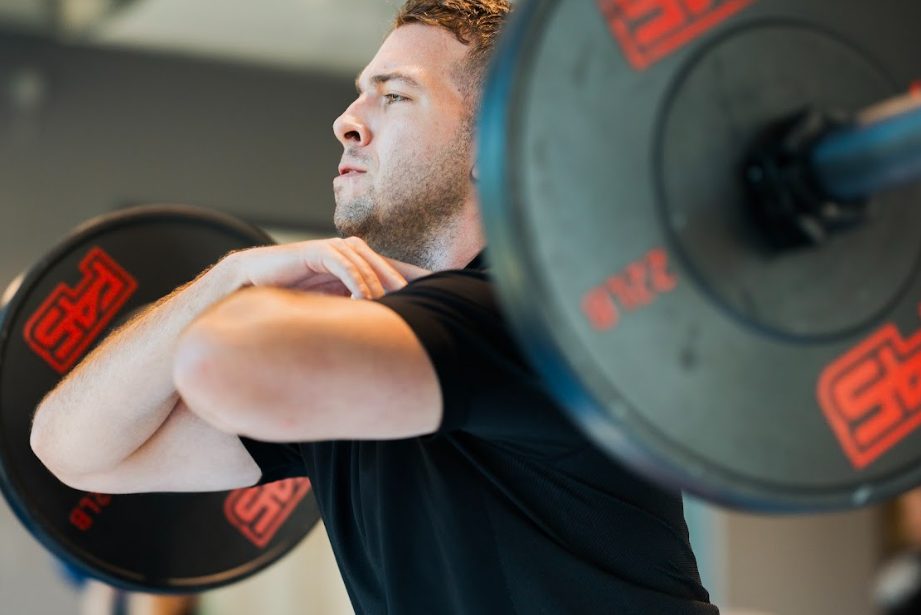
There’s no “one-size-fits-all” routine when it comes to building muscle – but the most effective programs all share a few key principles.
Muscle growth happens when you challenge your muscles consistently and allow them to recover properly. That’s why the best workouts to build muscle include:
- Progressive overload – gradually increasing weight, reps, or intensity over time to continuously challenge your muscles and stimulate growth.
- Compound lifts – movements like squats, deadlifts, and presses that train multiple muscle groups at once for functional, full-body strength.
- Isolation methods – targeting a single muscle group to refine strength, improve symmetry, and support balanced development.
- Time under tension – slowing tempo or adding pulses to extend muscle engagement and enhance endurance.
At F45 Training, we combine these principles with expert coaching in a motivating, community-driven atmosphere – so learn more with your complete guide to F45 workouts.
How easy is it to lose muscle mass?
“Use it or lose it” is a well-worn saying, but when it comes to muscle mass, it’s true: and, after just two to three weeks of inactivity, your body’s muscle mass can begin to wane⁶.
The good news? Thanks to a concept called ‘muscle memory’, your body doesn’t forget.
Muscle memory means that previously trained muscles rebuild faster when you return to exercise after some time off. This happens because your muscle fibers retain the changes from earlier strength training, allowing you to regain size and strength more efficiently the second time around⁷.
F45 strength training is designed to keep that progress active, with each resistance workout targeting lean muscle through consistent, resistance-based movements to help you maintain progress – and bounce back stronger.
Keen to try it out four yourself? Find your local F45 studio to start your F45 strength training journey today.
How to maintain muscle mass
Understanding how to maintain muscle mass starts with awareness, from training and nutrition to recovery – here’s what to focus on to see results.
Consistency in training
Strength isn’t built overnight. It’s built through consistency.
Consistent training keeps your muscles active, preventing tissue loss and driving steady progress. So to stay on track, aim for two to three weighted sessions each week8.
At F45 Training, you commit to a routine built around you and your goals. Our structured programs and in-app tracking keep you accountable, making it easier to stay consistent and see measurable progress.
Balanced nutrition
Fitness and nutrition go hand in hand – one’s only as strong as the other.
A well-balanced diet fuels training, supports muscle repair, and speeds up recovery. Prioritize whole foods, lean proteins, and nutrient-rich carbs to keep your body performing at its best. As a general guide, your daily diet should be made up of roughly:
- 45 to 55% carbohydrates – your body’s primary fuel for both training and recovery9.
- 15 to 25% protein – essential for repairing and rebuilding muscle tissue9.
- 25 to 30% healthy fats – important for hormone balance and long-lasting energy9.
Sleep and recovery
Recovery is where real growth happens.
Every weighted workout challenges your muscles, creating tiny tears in the fibers that need time to repair. When you rest, your body rebuilds those fibers stronger – an essential part of how we maintain muscle and keep your training progress steady10.
To support recovery and muscle growth, prioritize:
- Sleep – aim for seven to nine hours each night. The benefits of sleep go beyond rest – it’s when your body restores energy and repairs muscle tissue11.
- Hydration – replenish with water and electrolytes during and after your workout.
- Rest days – schedule one or two days each week away from heavy lifting to let your body reset12.
Our recovery workouts complement high-intensity sessions and help maintain flexibility, mobility, and joint health – all key to staying strong as we age.
Adaptation to life stages
Strength training looks different for everyone – and your approach should evolve with your fitness level, age, and health goals.
For example, if you’re taking weight-loss medication such as GLP-1 or Ozempic and want to know how to maintain muscle mass, upping your protein intake is key. These medications can promote rapid fat loss, but they may also reduce lean muscle and bone density13 – so use our guide on how to calculate your protein intake to work to keep your diet aligned to your fitness goals.
As we age, metabolism slows, and natural muscle loss increases – which is why strength training for older women and men alike is essential. Regular resistance workouts help you build and maintain muscle, aid metabolism, and protect bone health as you get older.14
Now that you know how to maintain muscle mass, learn how to protect your back from strain when you lift – and how to alleviate any DOMS from your last resistance workout!
Sources:
1 https://www.health.harvard.edu/staying-healthy/strength-training-builds-more-than-muscles
2 https://www.ncbi.nlm.nih.gov/pmc/articles/PMC4836564/
3 https://www.health.harvard.edu/exercise-and-fitness/exercises-to-relieve-joint-pain
4 https://www.healthline.com/nutrition/cardio-vs-weights-for-weight-loss#cardio
5 https://www.sciencedirect.com/science/article/abs/pii/S0165178124000337
6https://www.sciencedaily.com/releases/2015/06/150626095520.htm
7https://www.unm.edu/~lkravitz/Article%20folder/frequency.html
8https://perfectbalancenutrition.com.au/nutrition-for-strength-training/
9https://exercisedaily.com/the-science-behind-muscle-recovery-and-growth
10Muscle Recovery after a Single Bout of Functional Fitness Training
11https://jissn.biomedcentral.com/articles/10.1186/s12970-019-0282-y
12https://www.usaweightlifting.org/news/2024/march/10/understanding-the-role-of-rest-and-recovery-in-weightlifting
13 https://www.healthline.com/health-news/ozempic-muscle-mass-loss
14 https://www.nia.nih.gov/news/how-can-strength-training-build-healthier-bodies-we-age